L’Olivo Santa Barbara is a blog about cultural similarities and differences between Italy and the United States, with some emphasis on Santa Barbara, California. The blog addresses history, travel, film, music, art, food, and people and animals. Following an introduction in English, you can choose to read each post in Italian or English. Comments are welcome, as are ideas for future posts.
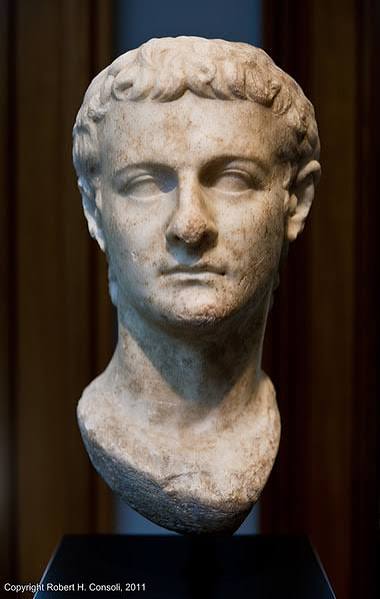
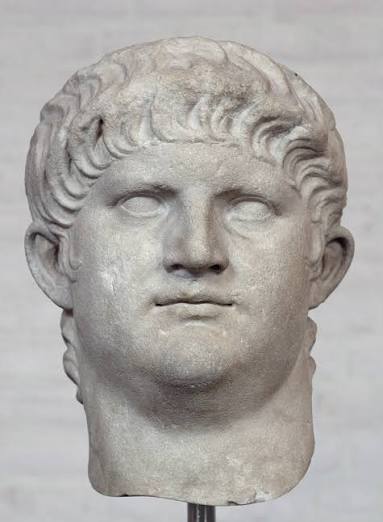
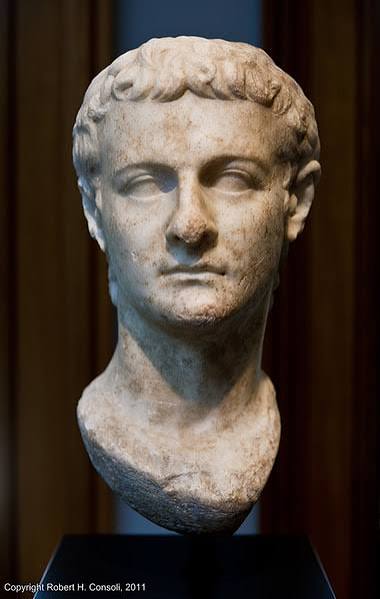
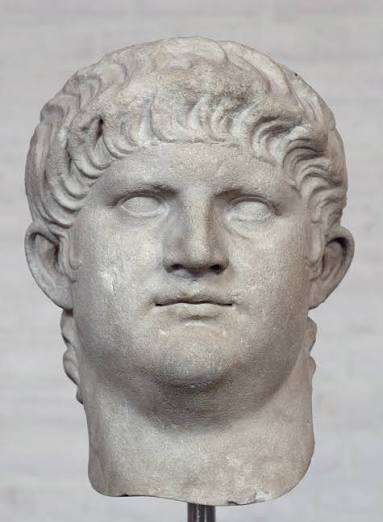
During the Roman Empire (c. 27 B.C – 476 A.D.), there were several generally “good” monarchs such as Augustus, Vespasian, Nerva, Trajan, Hadrian, and Antonius Pius. Terms often associated with their reigns are “peace,” “stability,” and “social welfare.” In contrast, there were the not-so-good emperors whose legacies are characterized by cruelty, murder, fiscal mismanagement, extremism, spectacle and narcissism. Two of the worst were Caligula, who reigned from 37 to 41 A.D, and Nero, who reigned from 54 to 68 A.D. They offer an interesting comparison to Donald John Trump 2,000 years later, keeping in mind the differences in government structure and the similarities that are metaphorical.
Caligula, who has been dubbed the “Mad” ruler, started out well; however, it is believed that a severe illness left him brain damaged, paranoid, and erratic. He ordered arbitrary executions of senators and insulted the Roman Senate by threatening to make his horse, Incitatus, a Roman consul. He declared himself a living god, built temples in his honor, appeared in public dressed as various deities, and demanded to be worshipped. He also drained the treasury with lavish projects. Fortunately, his reign was limited to four short but terrifying years.
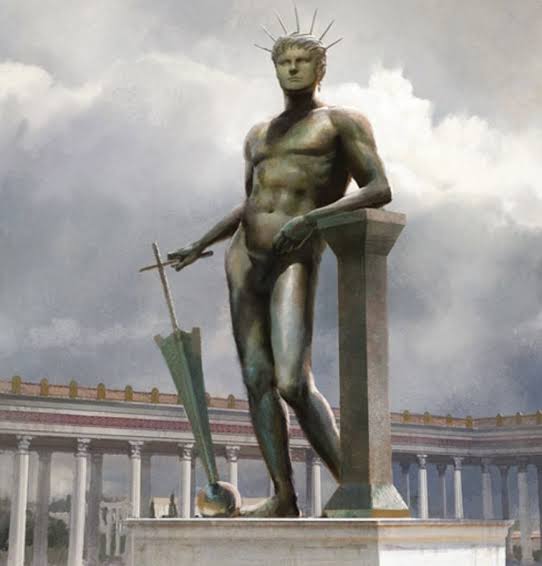
Nero’s atrocities were more calculated and extensive. Over his14-year reign, the “Malignant” ruler murdered his own family members, including his mother and his pregnant wife. He also executed political rivals and philosophers. After the Great Fire of Rome in 64 A.D., Nero seized public land to build his Domus Aurea (Golden Palace), which featured a massive statue of himself. This gilded Colossus of Nero stood taller than 100 feet (more than 30 meters) and depicted Nero as the Roman sun god, Sol. To deflect blame and create distraction, he brutally persecuted Christians, using them as human torches. Like Caligula, he bankrupted the treasury and completely alienated the senatorial class.
Although there is no evidence that Trump directly killed anyone, his failed policies most certainly did and still do. According to a report by the Bulletin of the Atomic Scientists, his mismanagement of the COVID-19 pandemic contributed to the unnecessary deaths of more than 100,000 Americans. A study by The Lancet medical journal estimated that about 40% of COVID-19 deaths in the first year of the pandemic could have been averted if U.S. death rates had matched the averages of other G7 nations. Moreover, Trump’s aggressive stance on immigration enforcement contributed to the deaths of 52 people so far in ICE custody, along with immeasurable cruelty and suffering for countless others. Let’s not forget Alex Pretti and Renée Nicole Good, who were killed during the ICE protests in Minneapolis in January 2026. Finally, lives are being lost in the ill-advised War with Iran, launched without foreseeing consequences and only to try to prove that Trump is a tough guy.
Trump shares the two emperors’ obsession with spectacle and vanity. He holds pumped-up rallies and tawdry public events, such as combat entertainment events on government grounds, and frequently brags about his gold-adorned fixtures and architecture. He tries to build monuments to himself, put his name on the Kennedy Center for Performing Arts, and continuously stamps his brand on other self-glorifying projects. He planned to televise a public firing-squad execution as if it were a Roman Colosseum circus. Like Caligula, he seemingly enjoys humiliating people.
But these pale in comparison to his systematic dismantling of democracy. He attacks norms and institutions with impunity—targeting co-equal branches of government, universities, law firms, the media, international allies, and any business or person who obstructs his grasp for unbridled power. Too often fear leads to institutional capitulation as he chips away at the constitution, the rule of law, and civil behavior. Furthermore, the grifting and corruption know no bounds. Countless examples exist of schemes designed to defraud citizens, monetize his name, manipulate markets, and forge deals with foreign leaders to the distinct disadvantage of the American people.
Please vote.
What happens to tyrants like these? See part 2 next week.
Durante l’Impero Romano (circa 27 a.C. – 476 d.C.), vi furono diversi sovrani generalmente considerati “buoni”, come Augusto, Vespasiano, Nerva, Traiano, Adriano e Antonino Pio. I loro regni sono spesso associati a concetti quali “pace”, “stabilità” e “benessere sociale”. Al contrario, vi furono imperatori ben meno virtuosi, la cui eredità è segnata da crudeltà, omicidi, cattiva gestione delle finanze, estremismo, esibizionismo e narcisismo. Tra i peggiori figurano Caligola, che regnò dal 37 al 41 d.C., e Nerone, che governò dal 54 al 68 d.C. Questi ultimi offrono un interessante termine di paragone con Donald John Trump, a duemila anni di distanza; un confronto che, pur tenendo conto delle differenze nelle strutture di governo, rivela analogie di natura metaforica.
Caligola, soprannominato il sovrano “folle”, iniziò il suo governo sotto buoni auspici; tuttavia, si ritiene che una grave malattia gli abbia causato danni cerebrali, rendendolo paranoico e instabile. Ordinò esecuzioni arbitrarie di senatori e insultò il Senato Romano, minacciando di nominare il suo cavallo, Incitatus, console romano. Si proclamò dio vivente, fece erigere templi in proprio onore, appariva in pubblico vestito da varie divinità ed esigeva di essere venerato. Inoltre, svuotò l’erario con progetti stravaganti. Fortunatamente, il suo regno si limitò a quattro brevi ma terrificanti anni.
Le atrocità di Nerone furono più calcolate ed estese. Nel corso dei suoi quattordici anni di regno, questo sovrano “malvagio” assassinò i propri familiari, tra cui la madre e la moglie incinta. Fece inoltre giustiziare rivali politici e filosofi. Dopo il Grande Incendio di Roma del 64 d.C., Nerone si appropriò di suolo pubblico per edificare la sua Domus Aurea, che includeva un’enorme statua che lo raffigurava. Questo colosso dorato superava i 30 metri d’altezza e ritraeva Nerone nelle vesti di Sol, la divinità romana del sole. Per sviare i sospetti e creare un diversivo, perseguitò brutalmente i cristiani, usandoli come torce umane. Al pari di Caligola, mandò in bancarotta l’erario e si alienò completamente il favore della classe senatoria.
Sebbene non vi siano prove che Trump abbia ucciso direttamente qualcuno, le sue politiche fallimentari lo hanno fatto, e continuano a farlo. Secondo un rapporto del Bulletin of theAtomic Scientists, la sua cattiva gestione della pandemia di COVID-19 ha contribuito al decesso evitabile di oltre 100.000 americani. Uno studio della rivista medica The Lancet ha stimato che circa il 40% dei decessi per COVID-19, nel primo anno di pandemia, avrebbe potuto essere evitato se i tassi di mortalità negli Stati Uniti fossero stati in linea con la media degli altri paesi del G7. Inoltre, l’approccio aggressivo di Trump in materia di immigrazione ha causato la morte di 52 persone sotto la custodia dell’ICE, oltre a infliggere sofferenze e crudeltà incalcolabili a innumerevoli altri individui. Non dimentichiamo Alex Pretti e Renée Nicole Good, rimasti uccisi durante le proteste contro l’ICE a Minneapolis nel gennaio del 2026. Infine, si stanno perdendo vite umane nella sconsiderata guerra contro l’Iran, avviata senza valutarne le conseguenze e con il solo scopo di dimostrare che Trump è un “duro”.
Trump condivide con i due imperatori l’ossessione per lo spettacolo e la vanità. Organizza comizi roboanti ed eventi pubblici di cattivo gusto – come spettacoli di combattimento in aree di proprietà governativa – e si vanta spesso dei suoi arredi e delle sue architetture impreziositi dall’oro. Cerca di erigere monumenti a se stesso, tenta di apporre il proprio nome sul Kennedy Center for Performing Arts e imprime costantemente il suo marchio su altri progetti volti all’autoesaltazione. Ha persino pianificato di trasmettere in televisione un’esecuzione capitale tramite fucilazione“. quasi si trattasse di uno spettacolo nel Colosseo romano. Al pari di Caligola, sembra provare piacere nell’umiliare le persone.
Ma tutto ciò impallidisce di fronte al suo sistematico smantellamento della democrazia. Egli attacca norme e istituzioni restando impunito: prende di mira altri rami del governo, università, studi legali, organi di informazione, alleati internazionali e qualsiasi impresa o individuo che ostacoli la sua corsa verso un potere senza freni. Troppo spesso la paura conduce a una capitolazione delle istituzioni, mentre egli scava alle fondamenta della Costituzione, dello stato di diritto e della convivenza civile. Inoltre, le sue pratiche di arricchimento illecito e la sua corruzione non conoscono limiti. Esistono innumerevoli esempi di stratagemmi concepiti per frodare i cittadini, monetizzare il proprio nome, manipolare i mercati e stringere accordi con leader stranieri, a tutto svantaggio del popolo americano.
Andate a votare.
Che fine fanno i tiranni come lui? Scopritelo nella seconda parte, la prossima settimana.
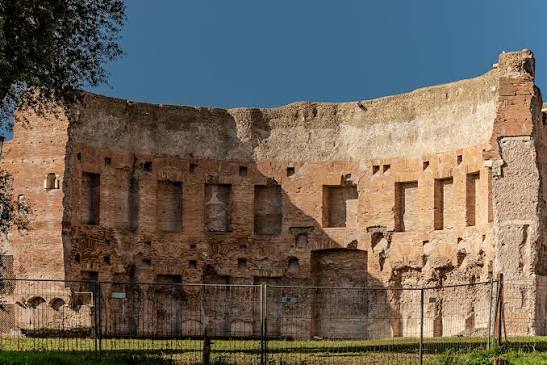
Many international publications have reported on the September 2026 opening in Rome of the new Museum of the Baths of Trajan. Built on the Oppian Hill overlooking the Colosseum, the underground museum displays what are believed to be the largest ancient wall mosaic and the largest wall fresco ever discovered from the Roman era. These are truly amazing archaeological discoveries. But first, let’s look at the back story.
During the 1990s, archaeologists began exploring beneath the Baths of Trajan in Rome for two primary reasons: to search for the remains of Emperor Nero’s legendary Domus Aurea (Golden House) and to understand the complex engineering behind the Trajan Baths’ architecture. They did indeed uncover structural infrastructure, including massive lead pipes believed to deliver water to the baths from aqueducts and stamped with Emperor Trajan’s name.
They also uncovered parts of the Domus Aurea, which was a vast complex that included Nero’s ultra-luxurious palace that he created after the Great Fire of 64 CE. He had seized huge portions of the burned city—including massive areas of public land—to build a private pleasure palace for himself. Gold everywhere: The interior and exterior walls were heavily gilded, rooms were encrusted in precious stones, and the entryway featured a 120-foot-tall bronze statue of Nero himself as the sun god, Sol. Sound familiar?
Then (and now), the public was outraged at the self-indulgent, megalomaniac tyrant. Decades after Nero, Emperor Trajan built in 109 CE a massive public bath complex over the Domus Aurea, covering about 15 acres (80,000 square meters), which included bathing and athletic facilities and libraries; it was the first Roman bath to create an outdoor park for people to use. The Domus Aurea complex was filled in with dirt and served as the foundation of the Trajan Baths. The Romans wanted to erase all traces of the hated emperor and give the land back to the people.
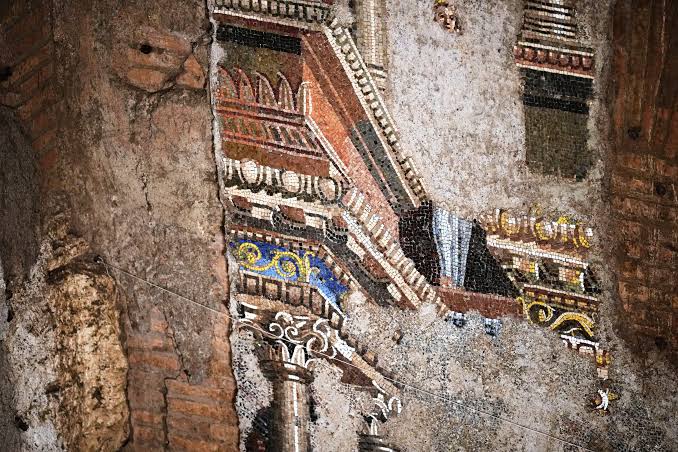
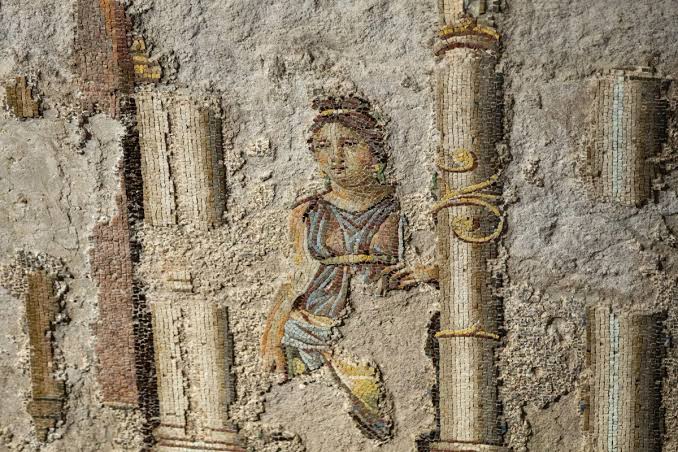
Ironically, by burying the Domus Aurea complex and sealing it in darkness, Trajan’s engineers preserved Nero’s rooms and art, allowing modern-day archaeologists to begin to uncover the past. The Muse and the Philosopher, the wall mosaic in the museum, measures 33’ tall and 52.5’ wide (10 meters by 16 meters) and depicts a theatrical background with columns, walls with inlaid marble, figures and statues of muses, centaurs, a poet and a bearded philosopher. Some tesserae—the cubes of stone, ceramic, and glass used to construct the mosaic—are missing; they may have been used or repurposed in the construction of the baths.
More recent excavations reveal a new section: a view of maritime villas on a Roman port. It is not yet known whether it represents an actual port or an imaginary one.
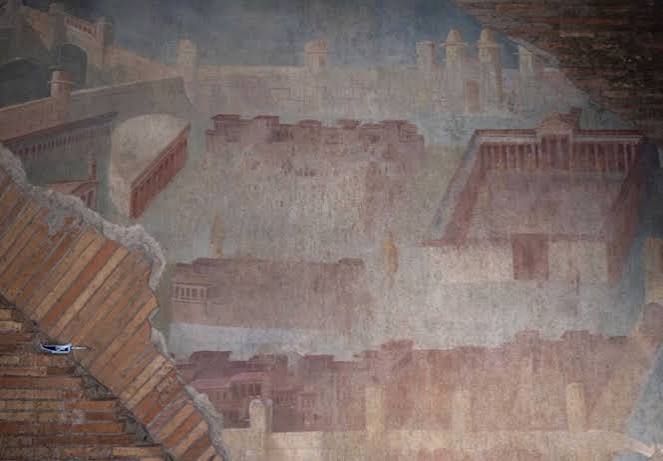
The Painted City is a wall fresco in the same structure. It shows a view of a city encircled by walls and towers. The town is complete with a theatre and a temple topped by a statue of Apollo. Included is a residential neighborhood of “insulae,” which are ancient Roman blocks of flats. The buildings are painted in perspective.
It is not known yet whether the mosaic and the fresco came from Nero’s Domus Aurea or a luxury residence in the complex. Digging continues.

 Click here to read in English
 Fai click qui per leggere in Italiano